
Table of Contents
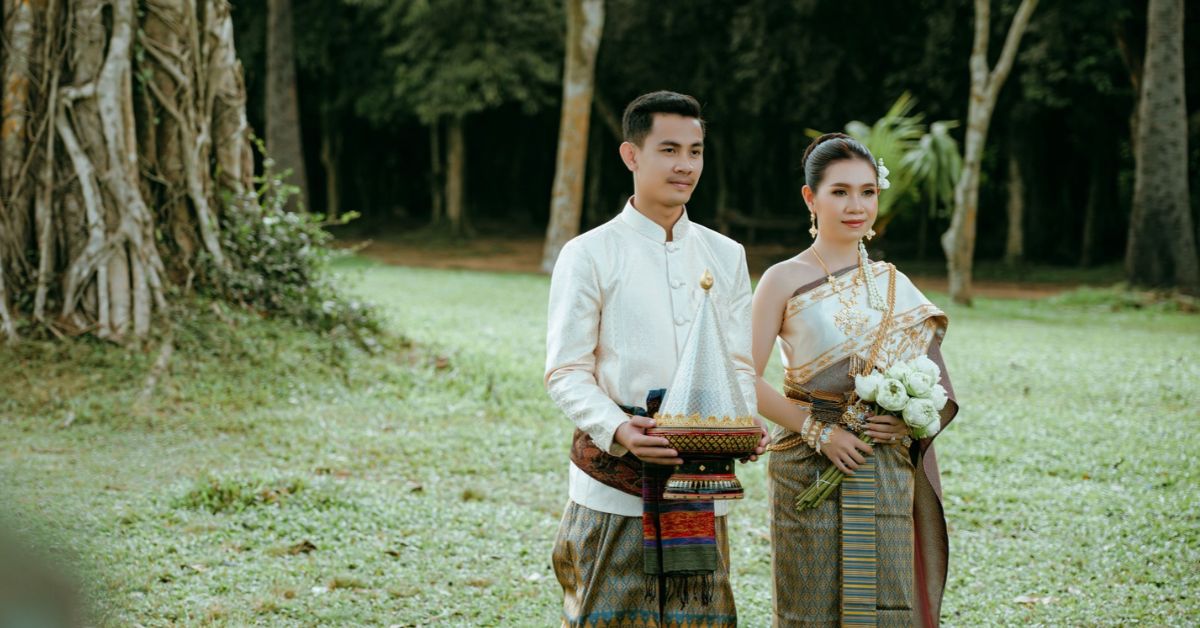
Image: HANUMAN PHOTO STUDIO
Have you ever seen a wedding where the bride’s dress is woven with not just silk, but an entire heritage? That’s what I feel when I see a traditional wedding in Cambodia, the land of Khmer culture. Amid the color, vibrancy, and rituals, every garment and every piece of jewelry speaks volumes.
Today let us talk about this dress, which is not just a dress, it is a complete tradition.
Dress born in the shadow of Angkor
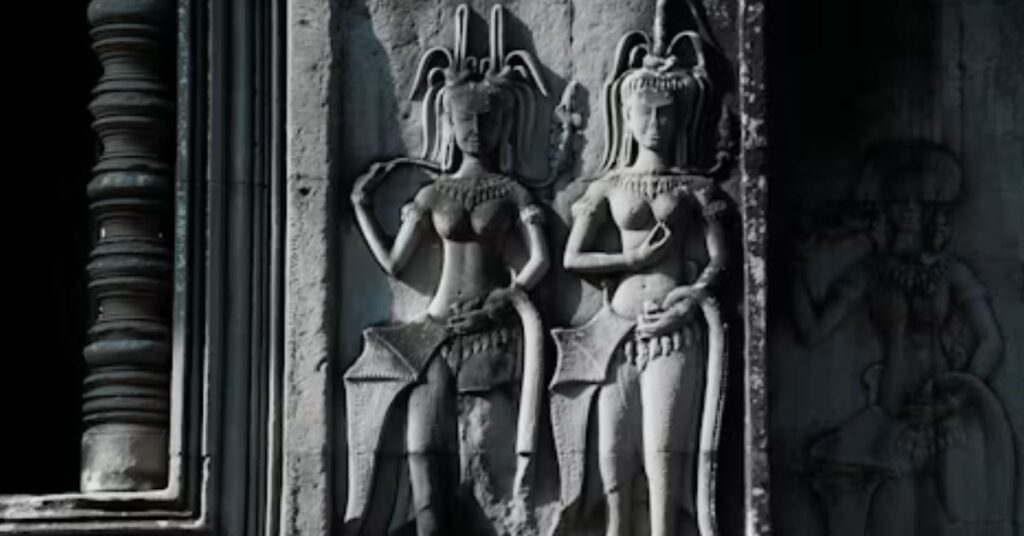
The name Cambodia immediately evokes Angkor Wat. The walls of that massive temple are adorned with carvings of apsaras, adorned with high crowns, heavy necklaces, and draped around their waists. Cambodian wedding attire seems to have its origins there. The bride’s adornment is often imbued with that same courtly, divine image.
This story also has deep ties to Indian culture. Khmer civilization has been strongly influenced by Hindu and Buddhist traditions. Therefore, many of their rituals and decorations reflect our own. It’s as if a relative is speaking to us in a slightly different language.
Sampota: The soul of the dress
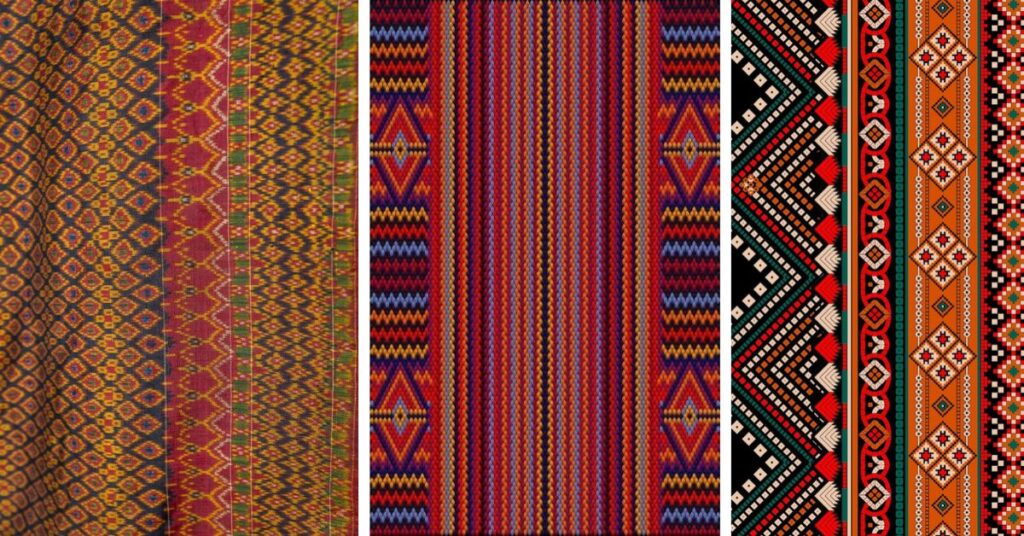
The most important part of traditional Khmer clothing is the sampot. It is a long piece of cloth wrapped around the waist, somewhat similar to our dhoti or lungi, but with a different design and tying method.
The most talked about wedding Sampot Hole It’s handwoven using a technique similar to ikat. Before weaving, the threads are dyed in different colors, then placed on the loom to create the design. Even the slightest mistake can ruin the entire pattern. Therefore, it takes days, sometimes weeks, to create a perfect sampot.
Usually for the groomSampot Chang KbenIt is worn in a way that involves folding the fabric from the front and pulling it back between the legs and tying it, creating the appearance of loose pants. In ancient times, this was a trend in royal courts, making the groom feel like a prince.
Bridal Makeup: From Silk to Crown
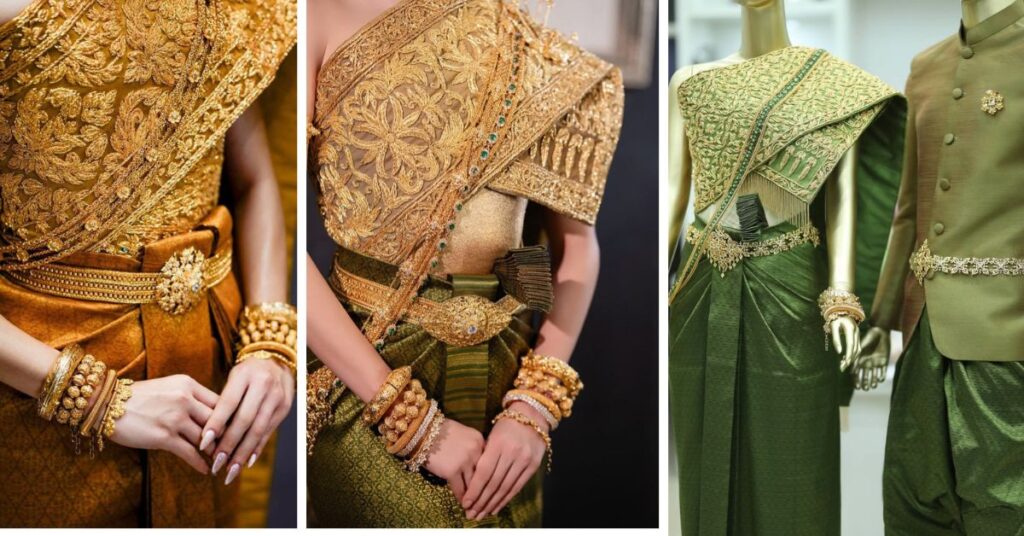
silk sampot, worn over the shoulder, in bridal attire Sbai The sbai is a decorative scarf-like garment worn diagonally over one shoulder, and features gold thread zari or embroidery that shimmers in the light.
When it comes to colors, red, gold, purple, and dark green are the most common. Red is considered auspicious and a color of happiness. Even our brides wear red, so this feeling feels familiar, doesn’t it?
Then comes the jewelry. Heavy necklaces, bracelets, armlets, anklets, and a crown adorning her head, all combine to give the bride the appearance of a celestial. Whether genuine or imitation, the intricate craftsmanship is remarkable. The crown’s pointed, rising shapes evoke temple peaks.
Not one, but several pairs
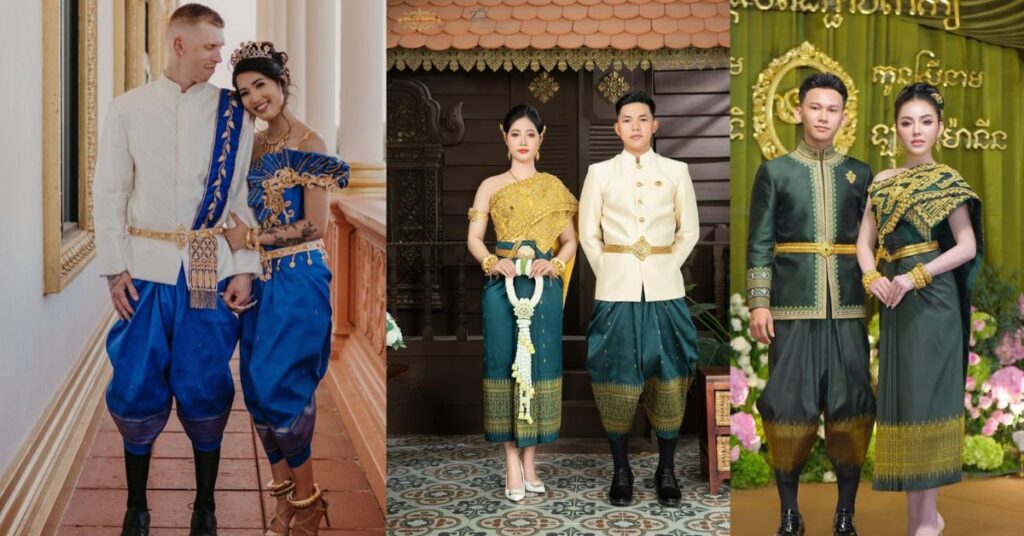
Now comes the most interesting part. In Cambodian weddings, the bride and groom often change clothes several times throughout the day. Traditionally, weddings spanned three days, with different attire for each ceremony. While weddings may have become smaller these days, this custom of exchanging clothes remains in many families. Sometimes four, sometimes five, and sometimes even more couples.
Every couple has their own style and mood. Light or dark red for the morning ceremony, a golden glow in the afternoon, and a different and modern color for the evening. Guests also wait to see what the couple will look like next time. A bit like the changing outfits for the sangeet, mehndi, and pheras in our country.
ritual dress
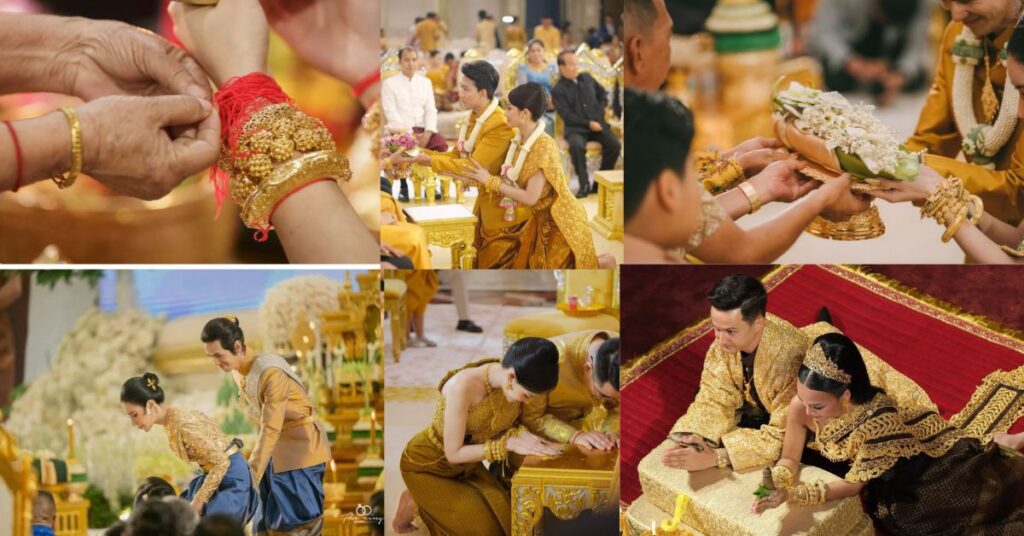
Cambodian wedding rituals are interesting in themselves, and the attire goes along with them.
The groom’s wedding procession (Hae Kor Ban):The groom, accompanied by his family and friends, arrives at the bride’s home, carrying trays of fruits and gifts. He is dressed in traditional silk attire.
Hair Cutting Ceremony (Gat Sak):This ritual is considered a symbol of new beginnings. The bride and groom’s hair is symbolically styled and a wish is made to leave behind the bad.
Flower Cutting Ceremony (Pka Sla):The bride and groom perform rituals involving objects like betel nut flowers, which symbolize the sweetness and strength of their new relationship.
Tying a thread on the wrist:Elders bless each other by tying a red thread around their wrists. This is similar to our tying of the sacred thread.
The most beautiful sight in all these rituals is when the couple is sitting close to each other and taking blessings, the shine of their silk clothes mingling with each other.
The hard work of artisans, which is rarely remembered
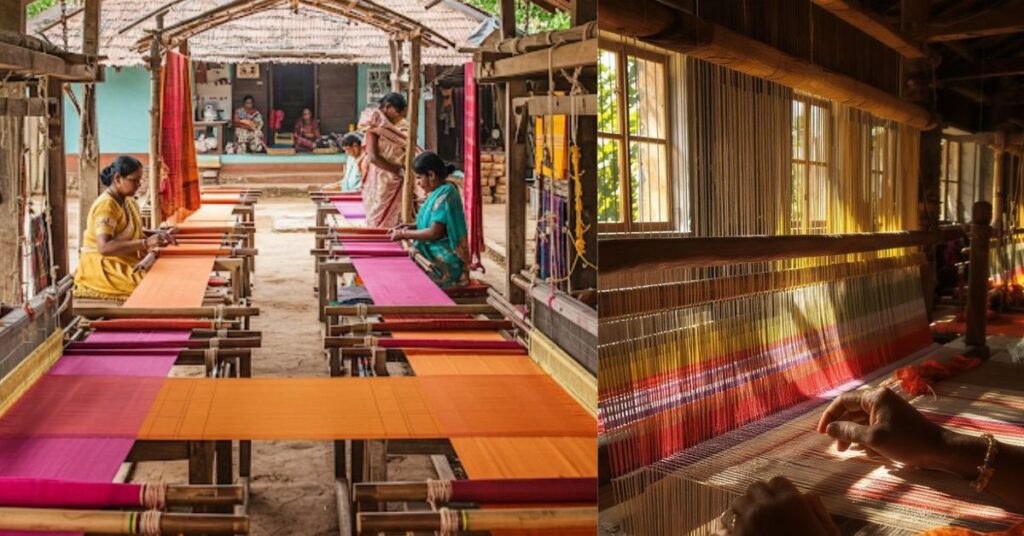
We often talk about the beauty of a garment, but forget the hands that make it. In Cambodian villages, especially in areas like Takeo and Siem Reap, many families have been weaving silk for generations. From raising silkworms to extracting the thread, dyeing, and weaving, every step involves manual labor.
There was a time when this art form faced a crisis, leaving many artisans and their knowledge behind. Today, some organizations and families are working to revive this skill so that new generations can stay connected to their roots with the loom. When you purchase a handwoven sampot, you are supporting the hard work of an artisan and an entire legacy.
Today’s brides and changing trends
The attire has also evolved over time. Many brides today wear traditional sampot with modern cuts. Western-style white gowns have also become part of the wedding day, and silk is being experimented with in new colors and lighter fabrics.
Yet I think the real magic lies in traditional attire. There’s a poise, a dignity. When a bride walks slowly with a golden sbai and a tiara, it’s as if an old fairytale is breathing.
What can we learn from this?
Clothing also reveals that every culture embodies its identity in its clothing. Whether it’s Cambodia’s sampot, India’s Banarasi sari, or Japan’s kimono, each garment holds a story of handcraft, weather, history, and faith.
If you ever visit Cambodia, be sure to check out the handwoven silk fabrics in the markets. Bargain a bit, talk to the artisan, and ask how the patterns are created. Believe me, you’ll return with not just a cloth, but a story.
conclusion
Traditional Cambodian wedding attire isn’t just a means of adornment. It’s a way to remember one’s ancestors, stay connected to one’s homeland, and celebrate a moment of joy with utmost elegance. The rustle of silk, the sparkle of gold, and the sweetness of the rituals all combine to create an experience that touches the hearts of both guests and the couple.
Which part of the Cambodian costume did you like most: the bridal crown, the sbai, or the handwoven sampot? Let us know in the comments below