

2026 has already begun, and the first month, January, is about to end. So, why not start the year with Kerala? I’ve brought you another blog, a fun tour guide, sharing all the details of your Kerala trip in 2026. So stay tuned as we explore this vibrant and unique destination. We’ll begin this blog with the Arabian Sea and the Sahyadri mountain ranges.
“Located between the Arabian Sea and the Sahyadri mountain ranges Kerala, is a place in India where nature and culture are inextricably linked. Spread over 38,863 square kilometers, this state is renowned not only for its natural beauty but also for its excellent social norms. Recognized by UNICEF and the World Health Organization as the world’s first ‘Child-Friendly State,’ Kerala today is a beautiful example of the blend of modernity and tradition.
Table of Contents
ToggleFormerly known as ‘Malabar,’ this region’s history is steeped in tales of the valor of the Chera kings and cultural fusion. Since its current formation as ‘Aikya Keralam’ in 1956, Kerala has carved a distinct identity for itself. In this guide, we’ll explore not only Kerala’s glorious history but also its destinations that will make your trip in 2026 memorable.
Why only Kerala?
The perfect blend of relaxation and adventure
Kerala is called “God’s Own Country” because it is one of the few places in the world where nature displays its beauty everywhere. Geographically, Kerala is surrounded by the lofty Sahyadri mountain ranges on one side and the serene shores of the Arabian Sea on the other.
Here, you’ll find 41 rivers and countless lakes that make the region “water-rich,” offering gurgling water and lush forests at every turn. For adventurers, you can enjoy trekking in the high mountains and plains, and for those seeking relaxation, the tranquil beaches of the western coastal plains are sure to soothe your fatigue.
World-famous Ayurvedic healing
You’ll be surprised to know that Kerala’s climate is considered its greatest medicine. Despite its proximity to the equator, the lush greenery and heavy rainfall (approximately 3017 mm annually) keep the weather pleasant and temperate. This humidity and fresh air have made Kerala a global center of Ayurveda.
For your information, it rains here for 120 to 140 days a year, and this monsoon season is considered the best time for Ayurvedic treatments. The soil and climate here are so fertile for medicinal plants that the therapies offered here not only detoxify your body but also increase your longevity. This is why the people of Kerala are so health-conscious and energetic.
New tourism trends and improved connectivity in 2026
Traveling to Kerala in 2026 has become more accessible and modern than ever before. Kerala has leveraged its excellent human resources and literacy to make tourism digital and eco-friendly.
- Better traffic:In modern Kerala, the transport and currency exchange system is now so strong that foreign and domestic tourists do not face any problems.
- Smart Tourism:Thanks to digital literacy and powerful cooperative movements, you can now easily book homestays and local guides even in the smallest villages (like Mayyashi or Mahe).
- Sustainable Travel: Agritourism is now on the rise, offering a close-up look at the coir industry and spice cultivation. This not only connects you with nature but also boosts the local economy.
Celebrations and festivals
What do festivals mean to the people of Kerala? It is said that the true spirit of Kerala resides in its festivals. Festivals here are not just rituals, but also represent social interaction and vibrant displays of the arts. The beauty of Kerala lies in the deep reflection of its religious faith and secularism in its festivals.
The major festivals here can be seen in three broad categories:
- Onam – The State Festival of Prosperity: For your information, Onam is Kerala’s biggest and most celebrated festival. This is because it is celebrated throughout the state, transcending caste and religious boundaries. Floral rangolis, boat races, and traditional ‘sadya’ feasts characterize this festival. It celebrates the return of King Mahabali and the joy of the harvest.
- Colours of religious diversity and unity: Festivals of every religion are celebrated with great enthusiasm in Kerala:
- Hindu festivals: Festivals such as Vishu, the New Year, Navaratri, the worship of Shakti, and Makaravilakku are celebrated with devotion. Thiruvathira and Shivaratri also hold special significance.
- Islamic Festivals: Ramzan, Bakrid and Milad-e-Sharif are celebrated with brotherhood by the Muslim community here.
- Christian Festivals: Kerala’s large Christian population celebrates Christmas and Easter with great pomp in their churches with traditional Kerala architecture.
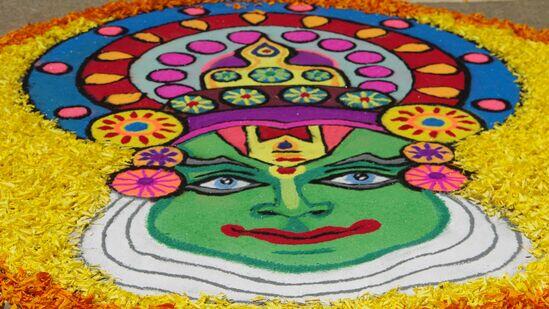
- Unique Temple Festivals: Kerala’s temples, mosques, and churches also have their own unique festivals. Temple festivals, including elephant processions and traditional dance performances like Kathakali, mesmerize audiences. These festivals have kept Kerala’s great art forms alive to this day.
Arts and culture
Kerala’s art and culture are not just a display, but a reflection of the fragrance of its soil and centuries-old history. Its cultural traditions are so rich that they encompass a remarkable blend of traditions, from the simplicity of folk arts to the grand ritual arts of temples.
To understand the vastness of Kerala arts, we can broadly divide them into two categories:
1. Visual Arts: That which mesmerizes the eyes
This includes the arts that you see being decorated and adorned on stage.
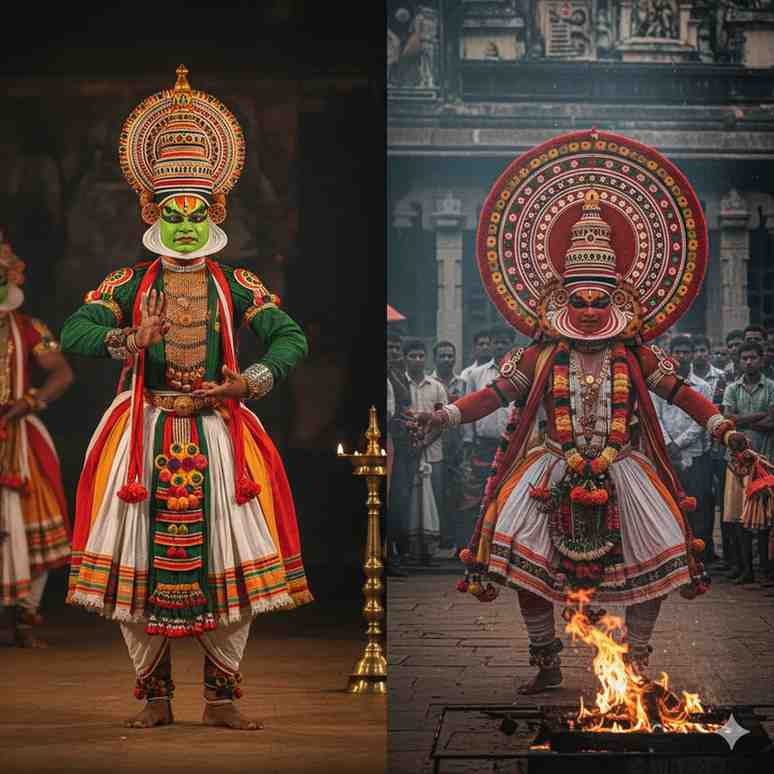
- Performing Arts: The world-famous Kathakali and Mohiniyattam belong to this category. Kathakali is known for its heavy makeup and masks, while Mohiniyattam is known for its softness and elegance.
- Ritual Arts: Arts like Theyyam, popular in North Kerala, beautifully depict the connection between humans and gods.
- Painting and Cinema: Kerala’s wall paintings and modern cinema are appreciated worldwide for their simplicity and realism.
2. Aural Arts: A sound that brings nectar to the ears
It encompasses the music and instruments of Kerala. Panchavadyam, or step music, resonates through the streets and temples of Kerala, forming an integral part of its cultural identity.
In short: Kerala’s art tradition isn’t just entertainment; it’s a way of life for its people. From ancient temple arts to modern art forms, Kerala has preserved its heritage with great care.
Best time to visit Kerala
Kerala’s beauty changes with each season. Whether you visit during summer or winter, or whether you want snow-cold mountains or torrential rains, Kerala welcomes you in every season.
April-May: For summer vacations
If you want to visit the mountains during your children’s summer vacation, then the months of April and May are the best.
- Why go:Hill stations like Munnar, Wayanad, and Thekkady offer pleasant weather during this time, making it a great place to experience the outdoors. While the rest of India experiences scorching heat, the hills of Kerala will offer a refreshing experience, offering cool breezes and refreshing views.
- Special tip:This is the best time to visit Eravikulam National Park and tour the tea plantations.
Monsoon (June-August): Names from Nature and Ayurveda
The monsoon season in Kerala is a dreamlike experience. If you love rain and the deep green surroundings, these months are perfect for you, but you should definitely have an umbrella with you, as it can rain at any time.
- Why go:Kerala’s rivers, waterfalls, and backwaters are at their fullest during the monsoon. Furthermore, according to Ayurveda,Monsoon season is considered best for body purification and healingBecause there is moisture and coolness in the air.
- Special tip:During this time, you can also find significant discounts on hotels and resorts, which you should take advantage of. Therefore, June and August are the best months for you.
Pleasant winter season (September to March)
This is the most popular time to visit Kerala. From September onwards, the weather takes on a pleasant coolness and freshness, which is well worth experiencing.
- Why go:It’s neither too hot nor too rainy, making it the perfect time to enjoy houseboat stays in Alleppey, beach walks in Kovalam, and major festivals like Onam.
Special tip:December and January are very crowded, so if you are going during this time, make your bookings at least 3-4 months in advance.
10 Best Tourist Places in Kerala in 2026
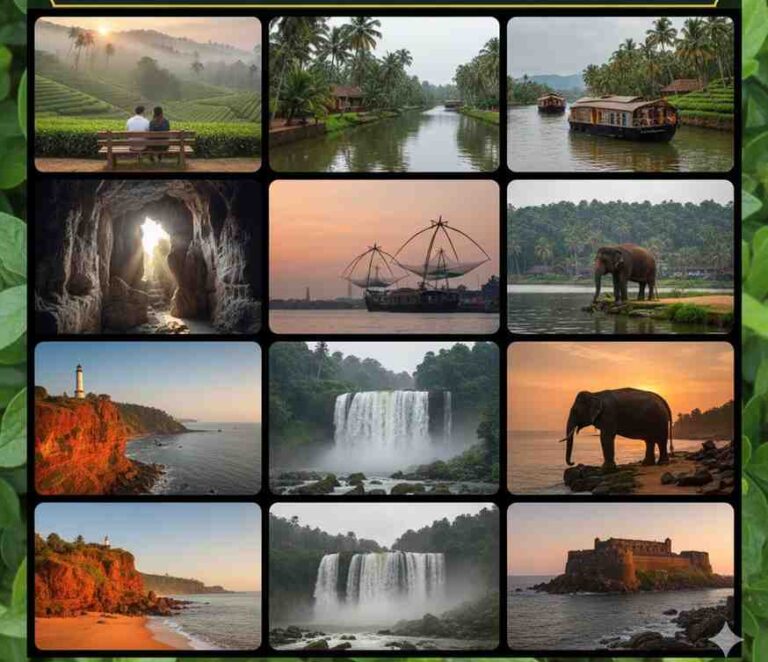
Kerala’s natural diversity is its greatest asset. Here, you’ll find a blend of history, mountains, forests, and seas unmatched anywhere else in the world. Let’s take a look at 10 places that will make your trip in 2026 memorable:
1. Kochi
Starting your trip to KeralaKochi(formerly known as Cochin), it is considered incomplete. Situated on the coast of the Laccadive Sea, this city is the largest urban area and commercial center of Kerala. Due to its geographical location and historical significance, it is‘Queen of the Arabian Sea’Known as (Queen of Arabian Sea).
Kochi’s greatest strength is its unique blend of modernity and ancient history. Today, the city is one of India’s most prominent international tourist destinations. If you’d like to learn more about Kochi, visit www.kochi.co.uk/The entire blog is written here, you can read it.
2. Munnar
If you love mountains, mist and the scent of tea,MunnarThis beautiful hill station, located in Idukki district, is a paradise for you. It is a beautiful hill station, situated on the banks of three rivers—Muthirapuzha, Nallathanni and KundalaIt is situated at the confluence of the two rivers, hence the name Munnar. Situated at an altitude of 1,700 meters above sea level, it is considered a sacred place.‘Kashmir of the South’It is also called.Here is the complete blog of Munnar, you can read it.
3. Alleppey/Alappuzha
If Kerala is called ‘God’s own country’ then it is true.Alleppeycan be considered the most beautiful part of that paradise. Formed on August 17, 1957, the district’s official name was changed in 1990.AlappuzhaWhen Lord Curzon saw the waves and the network of canals here, he spontaneously said –“This is the Venice of the East!” You can read the full blog here.
4. Thekkady
If you love dense forests, wild elephants, and spice plantations, this place is perfect for you. It deserves to be on your top list. Located in the Idukki district, this town is one of India’s most famous tourist destinations.Periyar National ParkThekkady is the gateway to the Indian Ocean. The name ‘Thekkady’ is derived from two words—’thekku’ (teak) and ‘adi’ (bottom/bottom), meaning abode of teak trees. If you want to visitSo the entire blog is here, click here to read it.
5. Wayanad
Located in the north-east of Kerala, amidst high mountains and dense forests.Wayanad Known for its mysterious caves and cool climate, the name ‘Wayanad’ comes from ‘Vayalanādu’ (Malayalam), which means—“Land of rice fields”Situated at an altitude of 700 to 2100 metres above sea level, this district is a part of the Western Ghats and the natural beauty here can mesmerize anyone.The full blog is here. A must-read, it will guide you through your travels.
6. Varkala
For your travel guide, let me tell you that Varkala, located about 51 km from Kerala’s capital Thiruvananthapuram, is a hub of natural wonders and deep faith. It is the only place in southern Kerala where high and majestic cliffs meet the Arabian Sea directly. These unique red cliffs are known by geologists as the ‘Varkala Formation’, which has been declared a ‘Geological Monument’ by the Geological Survey of India. If you want to capture the true essence of this place, be sure to read the full blog.
7. Kumarakom
Here, you’ll hear the chirping of birds and the music of water waves. This small town, nestled on the tranquil banks of Vembanad Lake, is just 14 kilometers from Kottayam. Once famous for its rubber plantations, it is now one of the world’s best rubber plantations.Eco-tourismIt is one of the centers.If you want to go here and calm your mind, then the entire blog is here, you can read it by clicking.
8. Thiruvananthapuram
The capital of Kerala, known for its grandeur, the divinity of the Sri Padmanabhaswamy Temple and rich museums.The royal capitalThe capital of Kerala, it is known as the “City of Hills” because it is nestled among seven hills and is renowned for its magnificent architecture. Here you’ll find the world’s richest temple.You will get to see the ‘Sri Padmanabhaswamy Temple’, whose divinity and mystery attract tourists from all over the world. This city is known for itsEducation and science are known.The city is not only ahead in literacy but is also considered the foundation of India’s space research due to the ‘Vikram Sarabhai Space Centre’.
Culture and Modernity:Here you will find ancient museums and palaces on one side, and modern IT parks and excellent beaches on the other, which makes it an ideal tourist destination.Click here to read the full blog.
9. Athirapally
Located in Thrissur district Athirappilly FallsIt is the largest and most magnificent waterfall in Kerala. Falling from a height of 81.5 feet, the waters of the Chalakudy River crash against massive rocks, creating a roar and a milky white sheen that is a sight to behold. Because of its grandeur, it is often considered a popular tourist destination.‘Niagara Falls of India’It is said. (Athirapally):It’s known as the “Niagara Falls of India.” This massive waterfall, tumbling amidst dense forests, has also been a famous setting for films like Baahubali.
10. Kovalam
For your information, located just 16 km from Thiruvananthapuram KovalamIt is a favorite destination for tourists from around the world. It has been on the international tourism map since the 1930s. Kovalam means—“Grove of Coconut Trees”, and the coconut trees lining the beaches here make this name completely justified.
The 10 places I’ve mentioned as a travel guide, please read them carefully and learn more about each topic. I’ve lovingly described each topic on the blog. You’ll find the full blog link for each section, so be sure to click and read them. Traveling is important for us, it’s about life and learning more. What’s special about the world, and how people live their lives, do they really live like us, or like the birds who don’t want much from life, neither too much money nor the false show-offs you see in cities. So keep traveling and refresh your experiences.
Kerala Trip: How to Reach and Best 4-Day Plan
Kerala, known as “God’s Own Country,” is known for its accessibility and beauty. You have three excellent options for getting here:
- Air travel:Kerala has three major international airports—Kochi, Thiruvananthapuram, and Calicut. You can take a direct flight to any of these cities depending on your destination.
- Rail travel:If you want to enjoy the natural scenery, the train is the best option. Ernakulam (Kochi), Alappuzha, and Trivandrum railway stations are well connected to all parts of the country.
Road Trip:You can reach Kerala via National Highway 66 by driving yourself or by luxury buses (Volvo) from Karnataka or Tamil Nadu, enjoying the greenery of Kerala.
4 days exclusive travel packages as per your choice
Since every traveler has different preferences, we have divided the 4-day trip into the following categories:
- Classic Hills and Backwaters:This is the most popular election.Kochi, Munnar and AlleppeyThis is best for those who are visiting Kerala for the first time.
- Beaches and Relaxation:If you want to relax by the sea,Kovalam and KumarakomChoose a combination of The serenity here will refresh you.
- Adventure and Wildlife:For nature loversThekkady and MunnarThe most exciting trip is to, where you can see elephants and spice plantations closely.
- Offbeat North Kerala:If you want to get away from the crowd,Wayanad and CalicutCaves and waterfalls are waiting for you.
Wellness and Spa:For peace of body and mindKumarakom and KovalamAyurvedic retreats are the best option.
Estimated Budget for Kerala Trip (4 Days)
- Budget Trip (₹10,000 – ₹16,000):You can stay in homestays or budget hotels. Local transport or small vehicles are used for sightseeing.
- Mid-range trip (₹18,000 – ₹28,000):Here you can find 3-4 star resorts, private houseboats, and breakfast and dinner. This is the most popular package.
- Luxury Trip (₹32,000 – ₹60,000+):It includes 5-star villas, private pools and VIP services, making your trip a royal one.
Special plans for all types of travelers
- For the family:From the Hill Palace in Kochi to boating at the Munnar Dam and houseboat fun in Alleppey, Wonderla Park is a bonus for kids!
- For honeymoon couples:Attukal Falls in Munnar and a candlelit dinner on a private houseboat in Alleppey. Watching the sunset over the Varkala cliffs will make your trip a romantic one.
- For backpackers:From the street food of Fort Kochi to the cheap homestays and local ferry rides of Munnar, a big experience at a low cost!
for the elderly:A short walk and a comfortable journey. A relaxing journey with a visit to the serene beaches and temples of Kovalam.
The experience you will never forget
- Night in the houseboat:Spend a night on a floating house in the backwaters of Alleppey.
- Tea plantations:Sipping fresh tea on the hills of Munnar.
- Cultural Shows:The dance of ‘Kathakali’ and the amazing martial skills of ‘Kalaripayattu’.
- Ayurvedic Massage:Relieve body fatigue with traditional herbal oils.
Traditional food (currently):Taste over 20 dishes served on banana leaves.
Some important advice for travelers
- Booking:Book houseboats and hotels in advance during peak season.
- Driving:Travel on hilly roads (Munnar/Thekkady) only with an experienced driver.
- Rules of temples:Dress code (dhoti/sari) is mandatory in many temples in Kerala, follow it.
- Honor:Respect local culture and people’s privacy.
Taste of Kerala: What to Eat?
Kerala food is not only delicious in taste but is also a reflection of its rich history and culture.
Taste of Kerala
Kerala cuisine (Kerala culinary style) is a wonderful blend of the aroma of spices, the sweetness of coconut, and fresh seafood. Over 2,000 years of trading history has fused Arab, Portuguese, and European flavors into the cuisine.
Salient features of Kerala cuisine
- Coconut :Coconut is abundant in Kerala, so almost every dish here contains grated coconut or coconut.Coconut milkIt is used to thicken and make the gravy tasty.
- Spices:Black pepper, cardamom, cloves, ginger and cinnamon are the lifeblood of the food here.
- Coconut oil:Pure coconut oil is used for cooking here, which gives a distinctive and fragrant aroma to the dishes.
- Rice and Tapioca:The staple food here is rice.Tapioca (Cassava)It is also eaten with great relish here, especially with fish curry.
Popular breakfast
Kerala breakfast is not only healthy but also famous all over the world:
- Puttu and Kadala Curry:Steamed ‘puttu’ made from rice powder and coconut and ‘kadala curry’ made from black gram.
- Appam and Stew:Soft ‘appam’ made from rice flour is often served with coconut milk vegetable or meat stew.
- Idiyappam:These are also called ‘string hoppers’, which resemble rice noodles.
Sadhy: Traditional Kerala Dinner
Served during Onam and weddings, ‘Sadhya’ is a hallmark of Kerala. It is a pure vegetarian meal made withbanana leavesIt is served on.
- It consists of more than 20 dishes like sambar, avial (mixed vegetables), kaalan, thoran and olan along with rice.
- At the end ‘Payasam’Served is a delicious kheer made from jaggery or sugar and coconut milk.
Non-veg dishes
Kerala’s coastline makes it a haven for seafood lovers:
- Karimeen Pollichathu:Karimeen is made by coating fish in spices and frying it in a banana leaf.
- Malabar Biryani:This biryani from the Malabar region is known for its special ‘khayma’ rice and mild spices.
Kerala Prawn Curry:Shrimp curry flavored with coconut milk and tamarind.

Important things to keep in mind while traveling to Kerala
To make your trip to Kerala enjoyable and stress-free, it is very important to keep these small but important things in mind:
Packing List: Pack Smart
The weather in Kerala is hot and humid for most of the year, so your packing should be tailored accordingly:
- Clothes:Always lightweightCotton and breathable fabricsKeep it with you. Avoid synthetic clothes.
- Monsoon Gear:Rains can occur anytime in Kerala, so a strongSmall umbrella or light raincoatAlways keep it in your bag.
- Skin Care:To avoid the intense sun on the beachesSunscreen, sunglasses, and a hat is a must.
- Footwear:Carry comfortable sandals or walking shoes for walking.
Respect for local language and culture
Kerala is known for its literacy and traditions, so it is important to respect its culture:
- dress code:For entry into many temples (such as the Padmanabhaswamy Temple)Traditional attire (dhoti/sari)Required. Entry may be prohibited in skimpy clothing.
- Language:The main language is Malayalam, but most peopleEnglish and a little HindiI understand. People love to start a conversation with ‘Namaste!’
- Photography:Always take permission before taking photographs of any religious place or local person.
Transport Options: How to Get Around?
There are several good options available for commuting in Kerala:
- Private Taxi:If you’re with a family or group, booking a taxi for the entire trip is the most convenient option. This saves time and allows you to stop at your desired locations.
- Public Transport (KSRTC):Kerala has a robust government bus network. If you’re a budget traveler, the red KSRTC buses are a cheap and good option.
Ferry and Water Metro:In cities like Kochi and Alappuzha, instead of roadsLocal Ferry or Water MetroUse it. It’s not only cheaper but also makes the journey more enjoyable.

Conclusion
Kerala is not just a tourist destination, but aExperienceIt is the spirit that inspires us to live, to learn more. What is life really? And how should it be? You will find it in Kerala. It soothes your soul. Be it the misty hills of Munnar, the serene backwaters of Alleppey, or the majestic waterfalls of Athirappilly—every corner of Kerala tells a different story. In 2026, take some time off from your busy life and embark on this journey to ‘God’s Own Country.’
The culture, delicious food, and the love of the local people will make you want to come back again and again. So what are you waiting for? Book your tickets, pack your bags, and get going!Do let us know in the comments which place in Kerala tops your ‘bucket list’!
Frequently Asked Questions
Is Kerala safe for solo travellers?
Yes, Kerala is considered one of the safest states in India. According to 2026 reports, its high literacy rate and respectful treatment of tourists make it an ideal destination for solo travelers, especially women. Cities like Kochi and Munnar are considered safe to visit even at night, as long as you take simple precautions (like avoiding deserted places late at night).
How much budget is required for a Kerala trip?
Budget Trip:₹10,000 – ₹16,000 (per person, 4 days).
Mid-range trip:₹20,000 – ₹35,000 (per person, 7 days). This includes a 3-star hotel and good transportation.
Luxury Trip:Starting from ₹45,000 (IRCTC air tour packages also fall in the same range where accommodation and food are all inclusive).
Is there a language problem in Kerala?
Absolutely not! Although the main language here isMalayalambut in tourist areas almost everyoneEnglishMoreover, in cities like Kochi, peopleHindiShopkeepers and taxi drivers are quite adept at communicating with tourists, so you won’t have any language issues.

