

Today on this blog, we’ll learn about Rajasthan. Rajasthan is one of my most beautiful places to visit. Its forts, palaces, and glorious history are unforgettable. When you encounter its glorious history, only one name comes to mind:RajasthanThe people here, the environment, lifestyle, food, friendship and family atmosphere teach a lot.
Table of Contents
ToggleIt is India’s largest state by area. Renowned for its vastness and unique identity, it’s a must-visit state.
The pages of history clearly state that in 1800, George Thomas called it “Rajputana,” while the great historian James Tod named it “Rajasthan.” Sharing a 1,070-kilometer-long international border (the Radcliffe Line) with Pakistan, the state stretches from Punjab in the north to Gujarat in the south.
Whether it’s the golden sands of the Thar Desert, the world’s oldest Aravalli mountain ranges, or the serenity of Mount Abu—every corner of Rajasthan tells a new story. Spread across 342,239 square kilometers, this is the capital of “Colorful Rajasthan.”Jaipur It amazes the world with its architecture. If you’re a nature lover, the four tiger reserves and Keoladeo National Park will win your heart.
Best time to visit
To visit RajasthanOctober to MarchThe best time is considered to be between 10:00 and 11:00. There are several important reasons for this, which you can see below.
- Pleasant weather:Rajasthan’s pleasant weather is neither too hot nor too cold, with daytime temperatures remaining pleasant (10°C to 27°C). You can climb forts and wander through ancient markets for hours without sweating or feeling tired. Just make sure you don’t have any pre-existing conditions.
- Spring of festivals:Pushkar Fair, Jaisalmer Desert Festival and Jaipur Literature Festival take place during this time, making your trip pleasant and enjoyable.
The real fun of the desert:The true joys of camel riding and tenting in the dunes of Jaisalmer can only be experienced during the cooler months. Summer may not be as enjoyable.
Avoid the heat (April to June)
If you’re not used to the heat, avoid visiting Rajasthan between April and June. Temperatures can often peak during this time.45°C The scorching heat and blazing sun can not only spoil the fun of your trip but also pose the risk of heatstroke and dehydration.
Top 5 tourist destinations
1. Jaipur
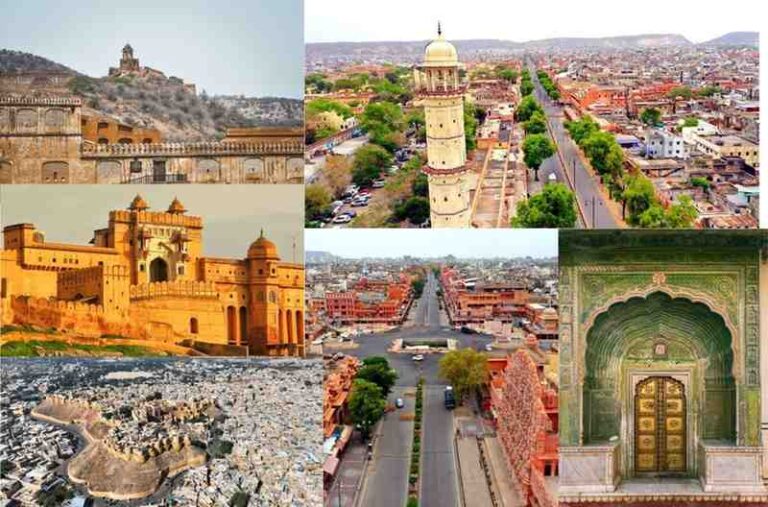
capital of Rajasthan Jaipur, which is being sold worldwide‘Pink City’ Rajasthan, also known as the “King of the Rings,” is renowned for its rich traditions and historical splendor. Surrounded on three sides by the Aravalli Mountains, this city is replete with architectural wonders.
The founding of Jaipur and the mystery of the colour ‘pink’
The founding of this historic city 1727-28 Maharaja of Amer in Sawai Jai Singh II There is an interesting story behind Jaipur getting the title of ‘Pink City’, which goes like this.
- Royal welcome:In 1876, when the Prince of Wales (Prince Albert) visited India, Maharaja Sawai Ram Singh had the entire city decorated in pink to welcome him.
- Identification:Since then, the Dholpuri stones and pink colour have become the main identity of this city.
Unparalleled town planning
Did you know that Jaipur was India’s first planned city? Ancient Indian scientists played a role in its construction.craftsmanshiphas been used. Which will give you a look in the architecture.
- Architect: The map of this modern city was designed by the famous architect of BengalVidyadhar ChakravartiIt was prepared by.
- Fake:The entire city is divided into nine sections. Wide roads (111 feet) and seven fortified gateways enhance the city’s security and beauty. Later, a new gate was built, called the “New Gate.”
Major attractions of Jaipur
If you are visiting Jaipur, do not forget to visit these places:
- Hawa Mahal: Famous for its 953 windows, this palace is called the crown of Jaipur.
- Nahargarh Fort: Situated on a hill, this fort looks like a guard protecting the city.
- Jantar Mantar: This ancient observatory built by Maharaja Jai Singh is a wonderful example of astronomy.
- Amer and Jaigarh Fort: Huge forts tell the story of the pride and war skills of the Rajputs.
Jalmahal: Situated in the middle of Mansagar Lake, this palace is known for its peace and beauty.

2. Udaipur
Jaipur in Rajasthan is known for its royal pink color.UdaipurUdaipur, with its blue lakes and white marble palaces, amazes the world. Udaipur is considered one of the world’s most romantic cities.
Establishment and rich history
- Founder: Establishment of Udaipur1559of the Sisodia dynasty inMaharana Udai Singh IIIt was done by.
- Reason for installation: When Chittorgarh became unsafe from Mughal attacks, the Maharana decided to establish a safe capital amidst the Aravalli hills.
- First Palace: Made on pearl crocodileMoti MahalIt is considered to be the first palace of Udaipur, the remains of which can still be seen today.
- ancient civilization: Udaipur is not just a 16th-century city; it also has a 5,000-year-old temple on the banks of the Aiyad River.‘Ahar Civilization’Traces of this have been found, which was also called ‘Tambavati city’.
Major tourist destinations
1. Lake Pichola and its islands
Udaipur’s popular man-made lake was built in the 14th century by a Banjara during the reign of Maharana Lakha.
- Jag Niwas (Lake Palace): Currently, this palace situated in the middle of the lake is now a world famous luxury hotel.
- Jag Mandir: Its construction was commissioned by Maharaja Karan Singh. It offers magnificent views of the lake and the city.
2. City Palace
You will be happy to know that thisThe largest palace in RajasthanThis magnificent palace, located on the banks of Lake Pichola, was commissioned by Maharana Udai Singh II and further expanded by subsequent kings. Its architecture is strikingly symmetrical and grand.
Land of valour and sacrifice
History of UdaipurMaharana PratapIt’s filled with the tales of heroes who defied Akbar’s yoke. Mewari pride is still evident in its culture, where tales of the invincible rule of warriors from Bappa Rawal to Rana Sanga resonate.
3. Jodhpur
The second largest city of RajasthanJodhpur, is renowned worldwide for its valor, handicrafts, and royal splendor. On May 12, 1459Rao JodhaFounded by, this city has today become a modern metropolis, which preserves within itself the soul of medieval India.
Jodhpur’s unique identity
- Sun City:It got this name because of the sun shining here throughout the year.
- Blue City):The blue colour of thousands of houses around Mehrangarh Fort gives it a magical look.
Main Attractions
1. Mehrangarh Fort
Situated on a rocky hill 125 metres above the ground, this massive fort is one of the most magnificent forts in India.
- Main gate: Jaipol (built by Mansingh) and Fateh Pol (built by Ajit Singh).
- Inner splendor: Palaces like Moti Mahal, Phool Mahal, Sheesh Mahal and Sileh Khana are famous for their carvings.
2. Jaswant Thada
This “The Taj Mahal of Marwar” Also known as the “Mirror of the Dead” (Mirror of the Dead). Built in 1899 in white marble, this monument was built in memory of Maharaja Jaswant Singh II.
3. Umaid Bhawan Palace
This magnificent 20th-century palace is one of the largest private residences in the world. Part of it remains the royal family’s residence, while part operates as a museum and part as a luxury hotel.
Nearby places of interest
- Mandore Gardens: The ancient capital of Marwar and beautiful monuments.
- Khejarli:The immortal saga of the sacrifice of 363 people to save trees.
Kaylana and Balsamand Lakes: A quiet and pleasant place for a picnic.

4. Jaisalmer
It is located in the far west of Rajasthan.Jaisalmer, which“Golden City”Known as the Bhati Temple, it is a living museum located in the heart of the Thar Desert. In 1156 AD, the Bhati rulerRawal JaisalFounded by, the city is famous for its yellow sandstone palaces and mansions, which shine like gold in the setting sun.
Glorious history and support of Yaduvansh
- Installation: Jaisalmer was founded in the 12th century. Its rulers consider themselves descendants of Lord Krishna’s Yadu dynasty.
- Monolithic governance: The descendants of Rawal Jaisal ruled here uninterruptedly for about 770 years, which is a rare event in Indian history.
- Ancient names: In ancient times, this area was‘Madhra’Come‘Vallabhamandala’It was known as.
Geographical and climatic conditions of Jaisalmer
Jaisalmer is known for its rugged conditions and immense beauty:
- Sand dunes: There are high sand dunes here which change their position with the wind.
- Temperature: In summer the mercury here reaches 47°C, while in winter it is close to zero degree.
- Golden Sands: When the rays of the afternoon sun fall on the sands of Thar, it appears as if gold particles are scattered all around.
Major attractions and architecture
Jaisalmer’s narrow lanes and intricately carved havelis are a vivid reminder of medieval royalty:
- Jaisalmer Fort: This is one of the few forts in the world where the population still resides.
- Patwa’s Haveli and Nathmal’s Haveli: World famous for its intricate carvings and latticed windows.
- Gadisar Lake: An ancient and beautiful example of rainwater harvesting, with many temples and umbrellas built on its banks.
- Big Garden: Beautiful umbrellas built in the memory of the Maharajas of Jaisalmer are situated here.
Cultural significance
Despite being cut off from the outside world for centuries, Jaisalmer has preserved its original Indian culture, folk music, and architectural art.Jain temples (12th–15th centuries)There are excellent examples of architectural art.
5. Pushkar
Nestled amidst the Aravalli Hills in Ajmer district of Rajasthan.Pushkar It is one of India’s most ancient and sacred cities. Surrounded by hills on three sides and the “Nag Pahad” on one, the city is known for its spiritual tranquility, sacred lake, and the world’s only major Brahma temple.
Mythology and mystery of the name
‘Pushkar’ in Sanskrit means“Blue Lotus”According to Hindu beliefs:
- Creation of the universe:When Lord Brahma chose a place on Earth for a yajna, a lotus flower fell from his hand. Where it fell, a sacred lake was formed, which came to be known as Pushkar.
- Tirtharaj:to Pushkar Lake‘Tirtharaj’It is considered the “King of Pilgrimages.” It is believed that no pilgrimage is complete without a holy dip here.
Key attractions and features
1. Jagatpita Brahma Temple
It is one of the few temples in the world dedicated to Lord Brahma, the creator of the universe. Dating back to the 14th century, the temple’s red spire and the statue of Lord Brahma enshrined in the sanctum sanctorum are a center of devotion for devotees.
2. Pushkar Lake and 52 Ghats
This crescent-shaped lake is surrounded by 52 ghats. Around 400 blue temples surround the lake, the echoing chants of which add to the divine atmosphere.
3. Pushkar Camel Fair
Every year, during Kartik Purnima (October-November), the world’s largest camel and cattle fair is held here. This fair is not only a hub of trade but also a wonderful celebration of Rajasthan’s folk culture, music, and colors, attracting millions of domestic and foreign tourists.
4. Rose Garden of Rajasthan
Pushkar is considered the most sacred place in Rajasthan.‘Rose Garden’Roses are cultivated here on a large scale and the rose extract is exported all over the world.

History and culture
- Ancient heritage:Pushkar is also mentioned in the Ramayana and the Mahabharata. Although many of the temples here were destroyed by Aurangzeb’s army in the 18th century, they were later restored by Maratha and Rajput rulers.
- Importance of Sikhism:Gurudwaras are also built here in memory of Guru Nanak Dev and Guru Gobind Singh. ‘Govind Ghat’ holds special significance for Sikh devotees.
Tastes of Rajasthan: 9 Vegetarian Recipes
Rajasthan is renowned not only for its forts and tales of valor, but also for its “royal taste.” Its cuisine is a unique blend of the region’s climate and traditions. If you’re planning to “Padhaaro Mhare Desh,” don’t forget to savor these 9 famous dishes:
1. Daal Baati Churma: The true identity of Rajasthan
- A Rajasthani thali is incomplete without this dish. Hot and piping hot, dipped in ghee.Baati, sharpPanchratna Daland sweetChurma—This combo not only tastes amazing but also gives you a lot of energy.
2. Gatte ki Sabji: The Magic of Gram Flour
- This is one of Rajasthan’s most beloved dishes. Soft gram flour dumplings are cooked in a gravy of yogurt and traditional Rajasthani spices. Eating it with chapatis or dal-baati is a wonderful experience.
3. Ker Sangri: A Priceless Gift of the Desert
- Made from the ker and sangri plants that grow in the hot desert sand, this vegetable is rich in nutrients (protein). Its tangy and spicy taste is long-lasting.
4. Millet Roti and Garlic Chutney
- Millet, grown in harsh climates, is the staple grain here. When thick millet bread is served with ghee and spicy spices,Red Garlic ChutneyWhen combined, it beats any five-star meal.
5. Mirchi Vada: A famous treat from Jodhpur
- Jodhpur’s Mirchi Vada is exported worldwide. Large green chilies are stuffed with a masala potato filling and then fried in a gram flour batter. It’s the perfect snack to accompany your evening tea.
6. Potato-Onion Curry
- This is a classic Rajasthani dish. Shallots and potatoes are cooked with plenty of ghee and spices. It’s delicious when served with Bejad ki Roti.
7. Ghevar: The sweetness of festivals
- Made from refined flour and ghee, this latticed sweet is especially prepared during Teej and Gangaur. Malai Ghevar, or Sugar Syrup Ghevar, evokes sweet memories of Rajasthan.
8. Mohanthal: Royal Sweetness
- Made from gram flour, pure ghee, and sugar, this traditional barfi is infused with the aroma of saffron and cardamom. It is a staple of every special occasion in Rajasthan.
9. Onion Kachori
- A hot onion kachori for breakfast is a day in itself. Its crispness and the balance of spices will keep you coming back for more.

Add Your Heading Text Here
Rajasthan’s culture is based on the principle of “Atithi Devo Bhava.” Its lifestyle, simplicity, and grandeur are quite popular.
1. Folk dance and music
Rajasthan’s music is heartwarming. Folk artists have been keeping their art alive for generations:
- Ghoomar:This is the state dance of Rajasthan, which is performed by women in a circle wearing long lehengas on special occasions.
- Kalbelia:It is also known as the “snake charmer dance.” UNESCO has listed it as a World Heritage Site. Its speed and flexibility mesmerize audiences.
- Puppeteer:This art of telling stories of kings and emperors through threads is centuries old.
- Manganiyar and Langa singers:The voices of these singers from Jaisalmer and Barmer convey both the solace and pain of the desert. Their main instruments are the kamaicha and sarangi.
2. Costumes and Jewellery
- Turban:In Rajasthan, the turban isn’t just a piece of clothing, but a symbol of respect. The turban’s style changes every 15-20 kilometers.
- Dress:Women wear colourful lehengas and ‘odhanis’ with intricate work of gota-patti and bandhej.
- Jewellery:Kundan, Meenakari and ‘Theva art’ (famous art of Pratapgarh) make the jewellery here special.
Major festivals of Rajasthan
Festivals in Rajasthan are not just religious rituals but a celebration of social gathering.
1. Gangaur
This is the most important festival of Rajasthan, which is celebrated in the month of Chaitra.
- Importance:Unmarried girls worship Lord Shiva (Isar) and Mother Parvati (Gauri) for a good husband and married women worship them for the long life of their husbands.
- Special attractions:The Gangaur procession of Jaipur and Udaipur is famous all over the world.
2. Teej
Celebrated during the monsoon month of Shravan, this festival symbolizes greenery and joy. The “Teej Savari” (sawri) is a grand event in Jaipur.
3. Pushkar Camel Fair
Held on Kartik Purnima, this fair is the world’s largest cattle fair. It features camel races, folk music, and holy baths.
4. Desert Festival
This festival is held in the Jaisalmer desert in February. Tourists are drawn to the “Mr. Desert” competition, a mustache contest, and camel stunts.
5. Beneshwar Fair
It is known as the “Kumbh of the Tribals.” Held in Dungarpur, this fair is attended by a large number of Bhil tribes.
Budget and Transport
Proper planning is essential to making your trip to Rajasthan memorable. Here are the details:
How to reach
- Flight:Jaipur, Udaipur, and Jodhpur are major airports. Direct flights are available from major cities like Delhi and Mumbai. Jaisalmer and Kishangarh (for Pushkar) also have domestic airports.
- Train:The railway network of Rajasthan is very excellent.‘Palace on Wheels’Apart from the royal train like, trains like ‘Rajdhani’ and ‘Shatabdi’ connect major cities.
- Bus/Road:The Delhi-Jaipur Highway (NH-48) is excellent. Rajasthan State Road Transport (RSRTC) Volvo and Sleeper buses are the best option for budget travelers.
local transport
- Inside the city:In cities like Jaipur and Jodhpur, youOla/UberIn smaller towns,E-rickshaw And AutoThe most accessible are (be sure to bargain before finalizing the fare).
- Rental Car/Scooty:If you want to travel on your own, there are many citiesScooty or Car RentalService is also available.
- Inter city taxi:Private taxi is the most comfortable option to travel from one city to another.
Budget Estimate – (per person)
Rajasthan is a state where you₹1,500 per dayI can also create wonderful memories and₹50,000 per dayYou can also enjoy royal luxuries by spending a small fortune.5 to 7 day tripHere are the budget estimates for:
Category | Total Budget (5-7 days) | Key Features |
Budget Travellers ( | ₹12,000 – ₹18,000 | Hostels or guest houses, local buses/trains, street food. |
Mid-range | ₹25,000 – ₹45,000 | 3-star hotels, intercity private taxis, good restaurants. |
luxury | ₹70,000 – ₹1,50,000+ | Heritage Palaces/Resorts, Private Guided Tours, Fine Dining. |
8. Essential Travel Tips
Sun and weather protection
- Accessories:The Rajasthan sun can be quite intense, especially on the forts. Bring good qualityGlasses, wide-brimmed hatAnd SunscreenPlease keep it.
- Season:If you’re visiting in winter, the nights can be quite cold, so be sure to pack a good jacket or shawl.
The right outfit
- Modest clothing:Rajasthan is very sensitive to its culture. When visiting temples and forts, dress modestly. It’s a good idea to cover your shoulders and knees.
- Casual shoes:Climbing forts and wandering through old streetsWalking ShoesOr stick to comfortable sandals. Wearing heels can make things difficult here.
Health and diet
- Hydration:The air here is quite dry. Always carry a water bottle with you and drink at least 3-4 liters of water throughout the day to avoid dehydration.
Street Food:The spicy food here is delicious, but if you have a sensitive stomach, start with caution.
Conclusion
Rajasthan isn’t just a state, it’s a walking museum of India’s glorious history and vibrant culture. From the pink streets of Jaipur to the golden dunes of Jaisalmer, every corner tells a new and heroic story.
I believe thatEvery Indian must visit Rajasthan at least once in his life.—not only to see its massive forts, but also to experience its unparalleled hospitality and that “royal feeling” you won’t find anywhere else in the world. Rajasthan’s soil has a magic that will keep you coming back.
So, when are you packing your bags? The streets of ‘Rangeelo Rajasthan’ are waiting for you!